Your dry eye evaluation starts with your symptoms and health history, followed by an eye exam. Dr. Adeleke may then use the OCULUS Keratograph 5M, a non-contact diagnostic tool, to take a closer look at your tear film. It checks how quickly your tears break up, measures the tear layer along your lower lid as a sign of tear quantity, evaluates the oily lipid layer and takes images of your meibomian glands.
Dr. Adeleke reviews these results together with your exam to understand the type of dry eye you have, whether it comes from low tear production, fast tear evaporation, meibomian gland dysfunction or a mix. She then walks you through your findings and the treatments that fit them. Not everyone needs every treatment.

TearCare is an in-office treatment for meibomian gland dysfunction (MGD), when the oil glands along your eyelids become blocked. Soft, wearable eyelid devices apply controlled heat to warm and soften thickened oils. Dr. Adeleke then gently expresses the glands to help improve oil flow into the tear film. Dr. Adeleke then performs meibomian gland expression, gently clearing the softened blockages so oil can reach your tears again. At your evaluation, she will tell you whether TearCare is a good fit.
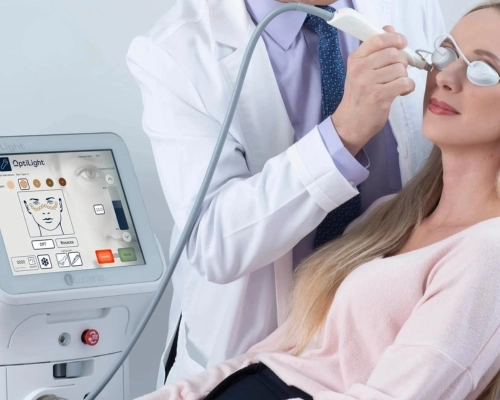
OptiLight by Lumenis uses intense pulsed light (IPL) to help improve signs of dry eye disease associated with meibomian gland dysfunction (MGD). The FDA has authorized it for adults 22 and older with moderate to severe MGD-related dry eye and certain skin types. During each short session, you wear protective eye shields while a gel and gentle pulses of light are applied to the skin below your eyes to help reduce inflammation around the eyelids. Many patients start with a series of four sessions, though your plan may differ. Dr. Adeleke will check your skin type, medications and health history first, and explain what you may feel and how to care for your skin afterward.

ZEST (Zocular Eyelid System Technology) is an in-office eyelid cleaning. We gently clean your eyelid margins and lashes to remove buildup, debris and bacteria. It is often part of a care plan for dry eye and blepharitis, an inflammation of the eyelids that can cause crusty eyelids.
Yes! Although it may seem surprising, watery eyes can actually be a symptom of dry eye disease. When your eyes become dry or irritated, they may produce excess tears to compensate. However, these reflex tears may not provide the moisture and protection your eyes need. If you frequently experience watery eyes, Dr. Adeleke can evaluate your tear quality and determine whether dry eye disease is the underlying cause.
Dry eye disease occurs when your eyes don't produce enough tears or when tears evaporate too quickly. Meibomian gland dysfunction (MGD) is a common cause of evaporative dry eye. It develops when the oil-producing glands along your eyelids become blocked or aren't functioning properly, allowing tears to evaporate faster. Treatments such as TearCare and OptiLight IPL may help improve gland function and relieve symptoms when MGD contributes to dry eye disease.
The right treatment depends on what's causing your dry eye symptoms and how severe they are. At Northpoint Eye Studio, Dr. Adeleke performs a comprehensive dry eye evaluation, which may include advanced testing with the OCULUS Keratograph 5M to assess your tear film and meibomian glands. Based on your results, she may recommend prescription eye drops, TearCare, OptiLight IPL, ZEST, or other treatments tailored to your needs. The goal is to address the underlying cause of your symptoms and improve your long-term eye comfort.