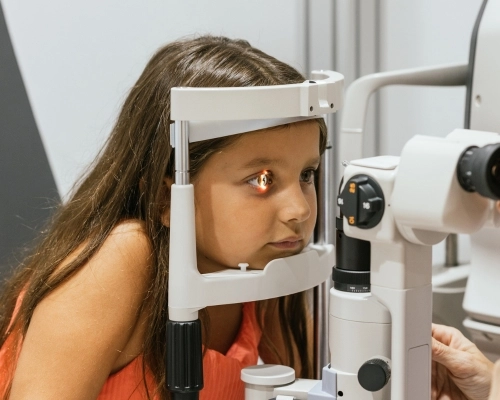

Myopia, or nearsightedness, is a vision condition where close objects remain clear but distant objects appear blurry. It is becoming increasingly common in children and young adults, often starting during the school years and progressing as they grow. While glasses and contact lenses correct vision, they do not slow the progression of myopia. Left unmanaged, it can lead to stronger prescriptions over time and increase the risk of serious eye health issues, including cataracts, retinal detachment, and glaucoma. Early detection and professional care are key to protecting long-term vision. With effective myopia management, progression can be slowed, reducing risks and helping children and young adults maintain clearer, healthier vision for years to come.
The eye has grown too long
The cornea is too curved

Squinting
Headaches
Excessive blinking
Eye rubbing
Closing one eye to read
Sitting close to the TV or computer screen
Needing to sit in front of the classroom
Poor performance in school
Avoidance of sports or other activities


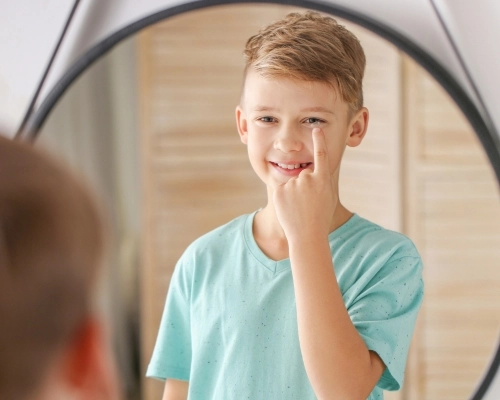
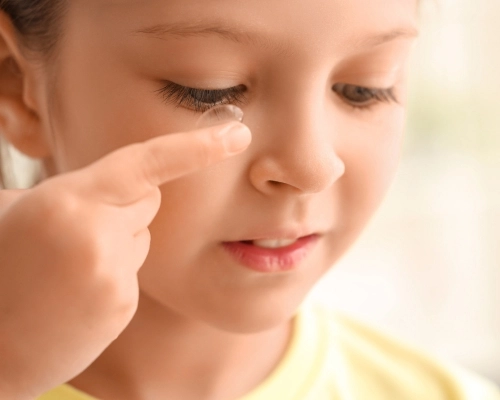
Soft multifocal contact lenses, such as MiSight, were originally developed for adults who struggle to focus on nearby objects. But they are now also used to slow the progression of myopia in children.
The results of myopia control with soft multifocal contact lenses are similar to orthokeratology, which we’ll cover below.
Ortho-k involves wearing special contact lenses overnight and removing them in the morning. They flatten the cornea over time to address low to moderate amounts of myopia.
Kids treated with ortho-k can experience a 50% reduction in myopia progression compared to standard glasses or contacts! And since there are no glasses, your child can enjoy clear and comfortable vision all day, every day!

Low-dose atropine eye drops are also effective in reducing myopia progression. Although stronger atropine eye drops (1%) may lead to dilated pupils, light sensitivity, and blurred near vision, current myopia management options have lower doses of atropine (0.01-0.05%) to minimize these issues.
Studies find that low-dose atropine delivers results similar to that of ortho-k lenses. Additionally, a combination of low-dose atropine and ortho-k may boost results further.

If you notice your child is squinting, rubbing their eyes frequently, or complaining of headaches, bring them in for a comprehensive eye exam.
Early detection and management of myopia helps kids maintain healthy vision for life and even improves their performance in school, sports, and other activities. After all, 80% of classroom learning occurs visually! We offer all of the myopia control therapies outlined above:
Soft multifocal contact lenses (including MiSight 1 Day)
Orthokeratology (ortho-k) lenses
Atropine eye drops
Myopia typically begins between the ages of 6 to 12. However, some management options can be started in kids as young as 5. The earlier your child starts managing their myopia, the better the outcome. We’ll work with you and your child to determine the best possible management plan.
Yes, children with myopia typically need glasses or another form of vision correction to see distant objects clearly. Your child’s correction needs depend on the severity of the myopia:
Mild Myopia: May only require glasses for specific activities like seeing the board at school or watching TV. Moderate to
High Myopia: Usually needs glasses full-time for clear vision and to prevent eye strain.
Management options cannot completely stop or reverse myopia progression. But since your child’s eyes are still growing, they can slow it down significantly.