
If your child is nearsighted, you may be used to hearing the same thing at each eye exam: their prescription has changed again. Glasses or contact lenses can make distant objects clear, but they don’t necessarily stop myopia from getting worse as your child grows. That leaves many parents asking an important question: Can you slow myopia progression in children?
For many children, the answer is yes. Today, eye doctors have several myopia control options designed to slow the progression of childhood nearsightedness rather than simply prescribing stronger glasses year after year.
Myopia, or nearsightedness, causes distant objects to appear blurry while things up close remain clearer. It commonly begins during childhood and can continue progressing as the eyes grow. In many cases, myopia progresses as the eye becomes longer from front to back, causing light to focus in front of the retina instead of directly on it. A child may therefore need a stronger prescription over time to maintain clear distance vision.
A stronger prescription doesn’t necessarily mean something is wrong. What matters is how quickly the myopia is progressing and whether there may be an opportunity to slow that progression while the eyes are still developing.
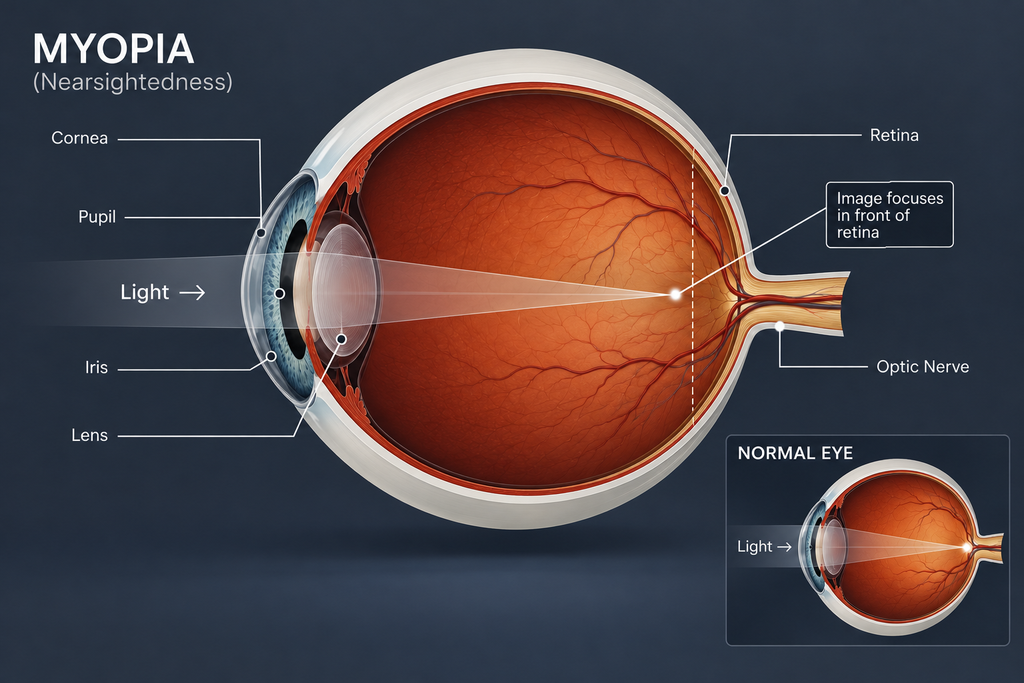
Myopia can’t currently be permanently reversed, but certain treatments can slow how quickly it progresses in children. This approach is often called myopia control or myopia management. The goal isn’t simply to avoid buying stronger glasses. Higher levels of myopia are associated with a greater lifetime risk of eye conditions such as retinal detachment, glaucoma, cataracts, and myopic macular changes. Slowing progression may help reduce how much myopia a child develops over time.
That’s why childhood myopia care has changed significantly! Instead of only correcting today’s blurry vision, eye doctors can now consider how to protect a child’s long term vision as well.
There isn’t one myopia treatment that’s right for every child. Age, prescription, eye health, lifestyle, maturity, family history, and the rate at which the prescription is changing can all influence which approach may be recommended. At Northpoint Eye Studio, options for managing childhood myopia include soft multifocal contact lenses, orthokeratology, prescription atropine eye drops, and lifestyle guidance.
Certain soft contact lenses are designed differently from standard contacts and may be used to help slow myopia progression in children while correcting their distance vision. For the right child, they can provide clear vision throughout the day while also becoming part of a longer term myopia control plan. Because contact lenses sit directly on the eye, proper fitting, hygiene, and follow up care are important.
If contact lenses are being considered for your child, a professional contact lens exam and fitting can help determine whether they’re ready and which lens design is appropriate.
Orthokeratology, or Ortho K, uses specially designed gas permeable contact lenses that are worn while sleeping. The lenses temporarily reshape the front surface of the eye and are removed in the morning, allowing many patients to see clearly throughout the day without glasses or daytime contacts. For children with progressing myopia, Ortho K can also be used as a myopia control strategy. It can be especially appealing to active children who play sports or simply prefer not to wear glasses during the day.
Because Ortho K lenses are worn overnight, careful fitting, cleaning, and follow up care are essential. Your eye doctor can determine whether your child is an appropriate candidate.
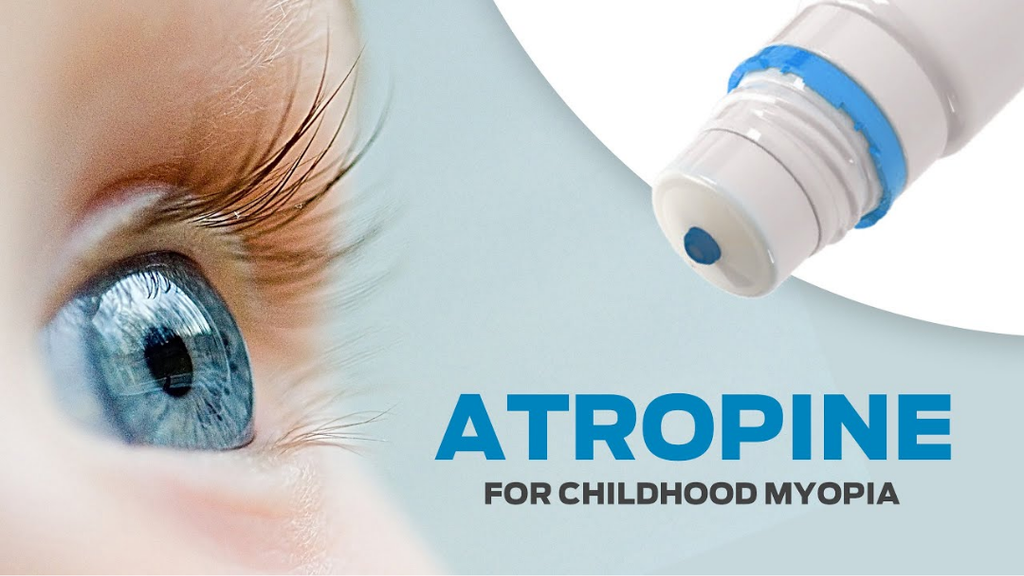
Prescription atropine eye drops are another option used to help slow childhood myopia progression. Lower concentrations of atropine have been studied specifically for myopia control while limiting some of the light sensitivity and near focusing effects associated with stronger concentrations. The appropriate concentration and treatment plan can vary from child to child. Atropine should therefore be prescribed and monitored by an eye care professional rather than viewed as a one size fits all solution.
Outdoor time is another important part of the conversation about childhood nearsightedness. Research has consistently linked spending more time outdoors with a lower likelihood of children developing myopia.
Once myopia is already progressing, outdoor time shouldn’t be considered a replacement for professional treatment. However, getting outside regularly is still a healthy habit that can be incorporated into a child’s overall myopia management plan. Parents should also encourage regular breaks during long periods of reading, homework, gaming, and other close up activities. Don’t think to eliminate screens or schoolwork, but to create healthier visual habits throughout the day.
Changes in a child’s glasses prescription are one way to track myopia progression, but eye doctors may also pay attention to how the eye itself is growing. Axial length is the measurement of the eye from front to back. Because increasing eye length is closely associated with myopia progression, it can provide additional information about how a child’s eyes are changing over time when this type of measurement is appropriate.
Parents don’t need to keep track of every measurement themselves. The important thing is to maintain regular comprehensive eye exams so changes in vision can be identified and monitored while a child is growing.
If your child is squinting to see things across the room, sitting closer to the TV, struggling to see the board at school, or needing stronger glasses at each eye exam, it may be time to have their vision evaluated. It’s especially important to pay attention when myopia begins at a young age or seems to be progressing quickly. Starting the conversation earlier gives you and your eye doctor more time to understand how your child’s vision is changing and discuss available options.
At Northpoint Eye Studio in Concord, NC, Dr. Joyce Adeleke helps children and families understand how myopia is changing and whether treatment may help slow its progression. Northpoint offers several myopia control options, including soft multifocal contact lenses, Ortho K, prescription eye drops, and lifestyle guidance.
If your child’s prescription seems to be getting stronger every year, call (704)-766-1130 to schedule an appointment and find out which options may be appropriate for their eyes.