Children don’t always tell you when they’re having trouble seeing. They may squint at the TV, move closer to see something across the room, or struggle to read the board at school without realizing their vision is different from anyone else’s. When blurry vision develops gradually, it can be difficult for a child to recognize that anything has changed.
That leaves parents with an important question: How can you tell if your child needs glasses when they haven’t complained about their eyesight?
The answer often comes down to recognizing small changes in everyday behavior. Understanding the signs your child might need glasses can help you recognize when it’s time for an eye exam, even if they haven’t mentioned anything about their vision.
Adults generally know what clear vision should look like, especially if they’ve experienced changes in their eyesight before. Children don’t always have that same point of reference. If they’ve been seeing things a certain way for months or even years, they may assume that’s how everyone sees.
This is particularly common with nearsightedness, or myopia, a condition that makes distant objects appear blurry while nearby objects remain clearer. A child with myopia may have no trouble reading a book or using a tablet but struggle to see something across the classroom. Other vision problems can be equally difficult to recognize. If one eye sees better than the other, for example, a child may rely on their stronger eye without realizing there’s a difference.
That’s why parents shouldn’t depend entirely on their children to identify vision problems. Sometimes, their everyday habits tell us more than their words!
Vision problems can show up in different ways depending on what your child is doing and how their eyesight is affected. Some signs are easier to recognize, while others may look like ordinary childhood habits.
Pay attention to when your child squints. If it consistently happens when they’re looking at distant objects, it may be worth having their distance vision checked.
If you’ve noticed your child narrowing their eyes while watching TV, looking at signs, or trying to recognize someone across the room, they may be squinting to make things appear clearer. Squinting temporarily changes how light enters the eye, reducing some of the blur caused by an uncorrected prescription. It’s similar to looking through a smaller opening to make an image appear sharper. While this can help momentarily, it certainly doesn’t correct the underlying vision problem.
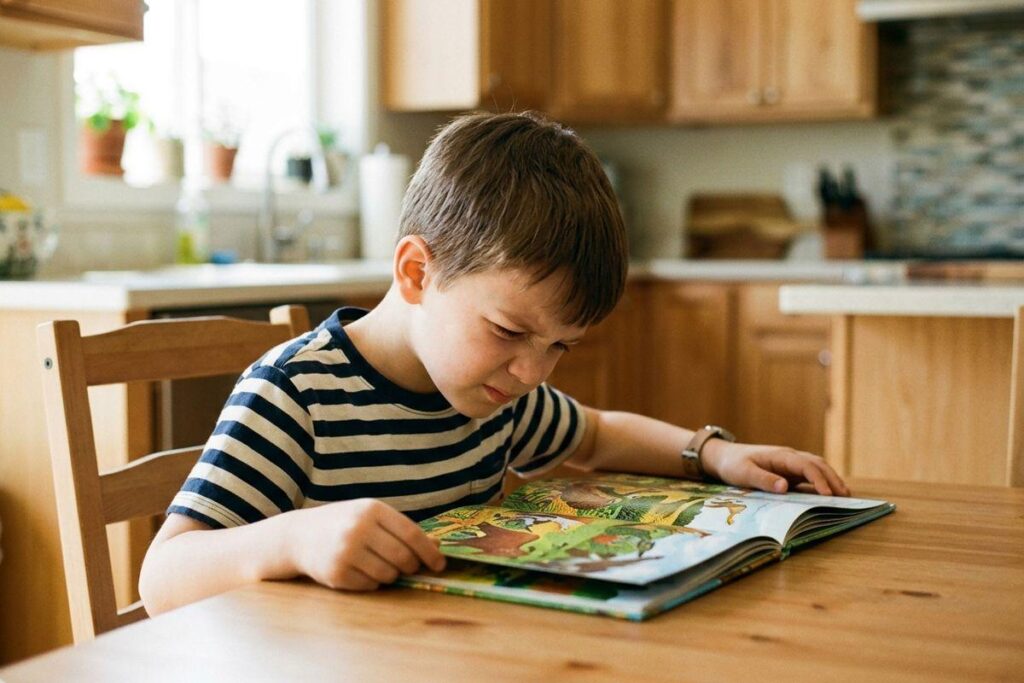
Children who are nearsighted often see nearby objects more clearly than distant ones. Moving closer to the TV or holding something near their face may make it easier to see details that otherwise appear blurry.
This doesn’t mean every child who sits close to a screen needs glasses! Many children naturally sit close to screens, especially when they’re absorbed in a favorite show or game. But if your child consistently moves closer because they seem unable to see comfortably from a normal distance, that may be a different story.
You might also notice them bringing books, toys, or handheld devices unusually close to their face. The important thing to watch for is whether your child seems to depend on being closer to see clearly, rather than simply preferring to sit that way.
Sometimes, the first indication of a vision problem happens in the classroom rather than at home. Your child might mention that the writing on the board looks blurry, ask to sit closer to the front, or have difficulty seeing information displayed across the room.
Think about how much of a school day depends on clear vision! Students frequently look back and forth between their desks, books, classroom displays, and teachers. A child who can read perfectly well up close may still have difficulty following information presented farther away.
Younger children in particular may not know how to explain what’s happening, especially if they’ve never experienced clear distance vision. Instead of saying the board looks blurry, they may simply assume it’s difficult for everyone to read. A comprehensive eye exam can help determine whether an uncorrected vision problem is contributing to these difficulties.
Some children tilt their heads, cover one eye, or close one eye when trying to focus on something. These behaviors can sometimes provide clues about how their eyes are working together.
When our eyes work together, they focus on the same object and send information to the brain, which combines it into one image. When the eyes aren’t properly aligned, they may send different images to the brain. This can make it more difficult to maintain comfortable, clear vision. Closing one eye may help by eliminating one of those images, while tilting or turning the head can sometimes place the eyes in a position where they work together more comfortably.
These behaviors can also occur when there’s a significant difference in vision between the two eyes or when a child has difficulty controlling certain eye movements.
If you regularly notice your child turning their head to watch TV, closing one eye while reading, or viewing objects from an unusual angle, an eye examination can help identify whether their vision or eye alignment is contributing to the habit.
Headaches, tired eyes, and discomfort during reading or screen time can sometimes be associated with vision problems. For example, a child who is farsighted or whose eyes have difficulty working together may experience additional visual strain during close up activities.
When children spend extended periods focusing on homework, books, or digital devices, their eyes must continually adjust and coordinate to keep what they’re looking at clear. If their focusing system is working harder than it should, they may experience tired eyes, intermittent blurry vision, or headaches.
You might notice your child rubbing their eyes, taking frequent breaks from reading, or complaining that their eyes feel tired after homework. If your child regularly complains of headaches, blurry vision, or eye discomfort, discuss the symptoms with their healthcare provider and consider having their vision evaluated. These details can help an eye doctor understand when the discomfort occurs and whether vision is playing a role.
Nearsightedness is one of the most common reasons school-aged children need prescription glasses, but it’s not the only condition that can affect their vision.
A child with nearsightedness may struggle to see distant objects, while a child who is farsighted may have to work harder to focus, particularly during close up activities. Astigmatism can cause blurry or distorted vision at different distances because of how the eye focuses light. Glasses help correct these focusing problems by changing how light enters the eye, allowing it to focus more accurately on the retina. The prescription needed depends on the specific condition and how it affects your child’s vision.
Remember, as a parent, identifying the exact condition isn’t something you need to figure out on your own. An eye exam can determine what’s affecting your child’s vision and whether glasses or another form of care would be appropriate.
If your child is diagnosed with childhood myopia, there may also be reasons to discuss how their vision could change as they grow. Our article, Can You Slow Myopia Progression in Children? What Parents Should Know, explains why some children develop stronger prescriptions over time and what treatment options may help slow that progression.
It’s reassuring to hear that your child passed their school vision screening. However, there’s an important difference between a school screening and a comprehensive eye exam.
A school vision screening is designed to identify children who may have difficulty seeing and need further evaluation. Depending on the school and screening program, children may be asked to identify letters, numbers, or symbols on a chart from a certain distance. Some programs also use instruments that help identify potential vision concerns. These screenings are valuable because they can identify problems that children and parents haven’t noticed. However, they typically focus on a limited set of measurements rather than evaluating every aspect of vision and eye health.
A comprehensive eye exam takes a much closer look at how your child’s eyes actually function. In addition to checking how clearly they see, an optometrist can evaluate their prescription, eye alignment, focusing abilities, and overall eye health. For example, a child might see the letters on a distance chart clearly enough to pass a screening but still experience difficulty keeping their eyes comfortably focused during extended reading or homework. A screening may not identify that type of problem, particularly when the program only measures distance vision.
Think of a school vision screening as an important first check, while a comprehensive examination provides a more detailed understanding of your child’s vision. If your child is showing signs of difficulty seeing, a passing school screening shouldn’t stop you from asking questions or scheduling an eye exam.
During a child’s eye exam, an optometrist evaluates more than whether they can read the letters on a chart. The goal is to understand how clearly each eye sees, how the eyes work together, and whether a prescription or another form of care would improve their vision.
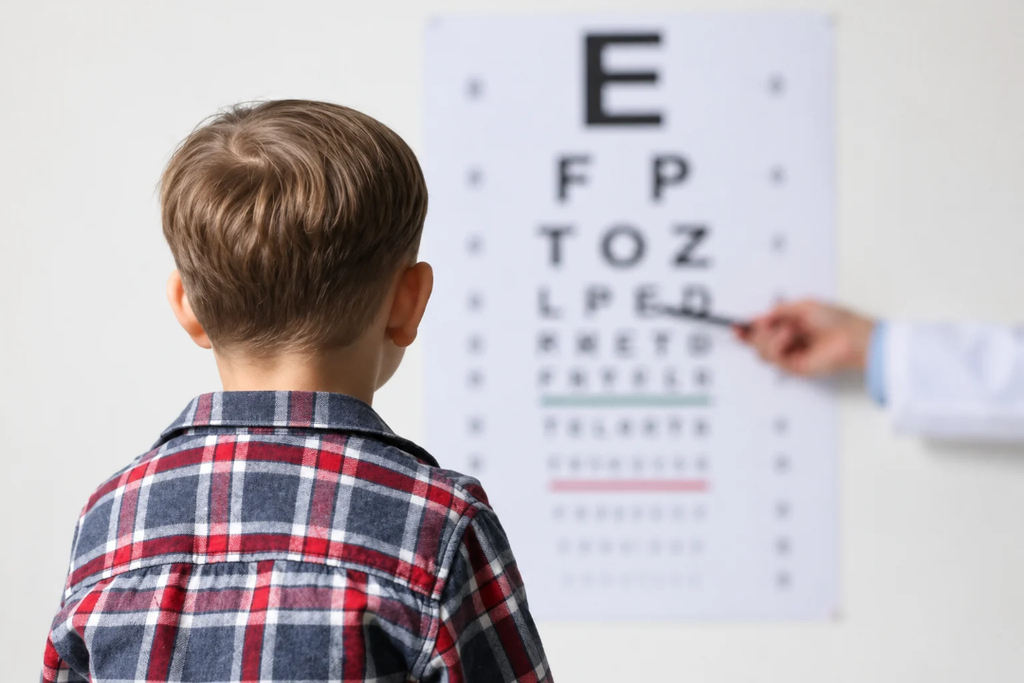
One part of the examination involves measuring visual acuity, which describes how clearly your child can see at a particular distance. Depending on their age, this may involve recognizing letters, pictures, or symbols. The doctor can also perform a refraction, which helps determine whether your child is nearsighted, farsighted, or has astigmatism. Using different lenses and testing techniques, the optometrist identifies the prescription needed to focus images more clearly. For some children, eye drops may be used to relax focusing during the measurement and obtain a more accurate result.
Beyond checking the prescription, the examination can assess how well the eyes move and coordinate with one another, how your child focuses on objects at different distances, and the health of the eyes themselves.
These measurements help the doctor understand not just whether your child is having trouble seeing, but why.
If glasses are recommended, the doctor can explain the prescription, when your child should wear them, and what changes you can expect as they adjust to clearer vision.
For children diagnosed with nearsightedness, the conversation may also include myopia management, particularly when there’s concern about how quickly their prescription could change as they grow.
You don’t need to identify every symptom or wait until your child says something is wrong! If you’ve noticed frequent squinting, unusual head positions, difficulty seeing at school, or complaints about blurry vision, those observations are worth discussing with an eye doctor. The same applies if your child’s vision seems to have changed since their last examination or they’ve missed a recommended vision screening. Recognizing a possible vision problem early gives you and your eye doctor an opportunity to understand what’s happening and determine whether care is needed.
And if your child does need glasses, that’s not necessarily a reason for concern. For many children, appropriate vision correction can make everyday activities more comfortable and help them participate more confidently in school, sports, and other activities.
At Northpoint Eye Studio in Concord, NC, Dr. Joyce Adeleke provides comprehensive eye exams to help children and families better understand their vision and eye health.
Having received her own first pair of glasses at age ten, Dr. Adeleke understands firsthand just how much clearer the world can become with the right vision correction! Whether your child has started squinting, is having trouble seeing at school, or simply needs their vision evaluated, we’re here to help you take the next step!
Call (704) 766-1130 to schedule an eye exam. Northpoint Eye Studio proudly serves families throughout Concord, Charlotte, Huntersville, Davidson, and surrounding communities.