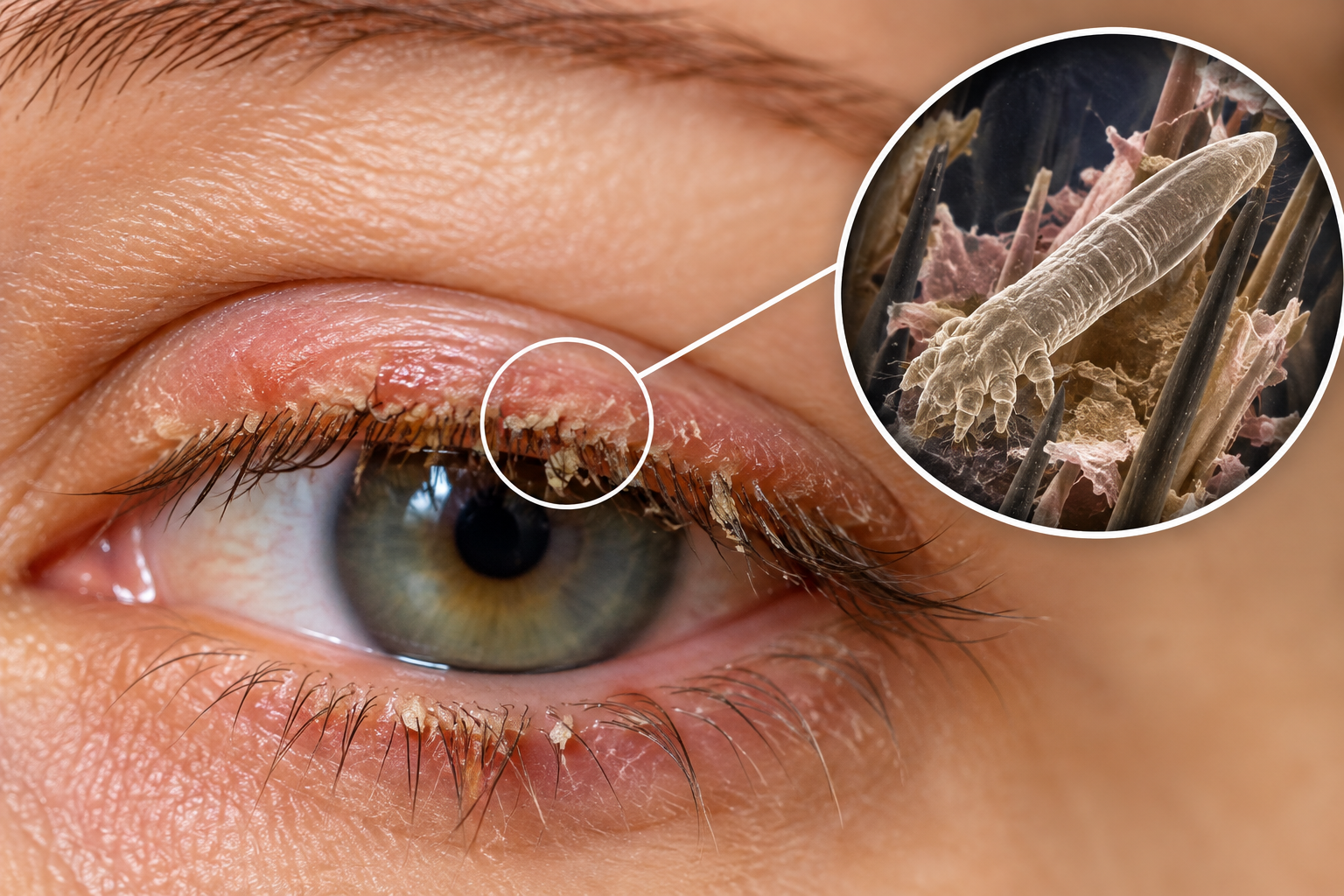
If your eyes are constantly itchy, red, irritated, crusty, or dry, and artificial tears only provide temporary relief, the problem might not be your eyes alone. It could start with your eyelids!
More specifically, microscopic mites living at the base of your eyelashes could be contributing to the irritation. Before you panic, Demodex mites are extremely common. Many adults have them without experiencing any symptoms. Problems can develop when these mites become more abundant and contribute to inflammation along the eyelid margins.
This condition is known as Demodex blepharitis, an often-overlooked source of chronic eyelid irritation that can also occur alongside meibomian gland dysfunction and dry eye disease. Understanding how these tiny mites affect your eyes is the first step toward finding the right treatment.
Demodex blepharitis is an inflammatory eyelid condition caused by microscopic Demodex mites. These naturally occurring organisms live in and around hair follicles and oil glands, including those found along your eyelashes.
Two species are particularly relevant to eye health:
When Demodex mites become problematic, they can contribute to inflammation and debris buildup around the eyelashes. Some patients develop ongoing symptoms that resemble dry eye, allergies, or other forms of blepharitis.
Did you know your eyelids do much more than protect your eyes? They also help maintain a healthy tear film.
Along the eyelid margins are tiny oil-producing structures called meibomian glands. These glands release oils that form the outer layer of your tears, helping prevent moisture from evaporating too quickly. When these glands become blocked or don’t function properly, a condition called meibomian gland dysfunction (MGD) can develop. This is a common contributor to evaporative dry eye.
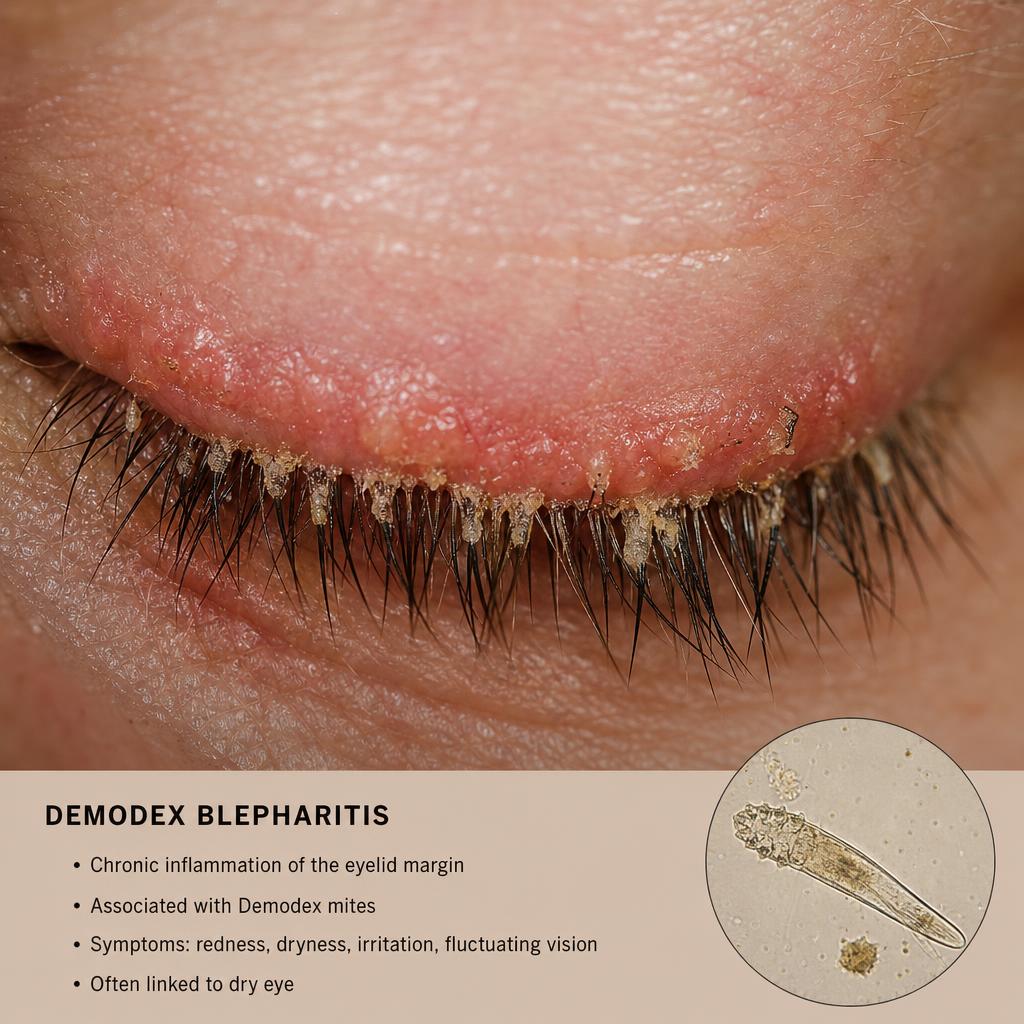
Demodex blepharitis can occur alongside MGD and contribute to eyelid inflammation. As a result, you may experience burning, irritation, fluctuating vision, or dryness even when using artificial tears regularly.
Persistent dry eye symptoms may require more than adding moisture. Identifying inflammation and other problems affecting the eyelids can be just as important. At Northpoint Eye Studio’s Dry Eye Center, Dr. Joyce Adeleke evaluates the factors contributing to dry eye symptoms to develop a personalized treatment plan.
Demodex blepharitis can be mistaken for seasonal allergies, bacterial blepharitis, dry eye disease, or contact lens irritation because many symptoms overlap.
Common signs and symptoms include:
Not everyone experiences itching. Some people notice that their eyelids feel unusually heavy, sticky, or irritated, while others primarily complain of persistent dryness.
Because these symptoms can have several causes, an eye examination is important for identifying what’s actually happening.
One of the most recognizable signs of Demodex blepharitis is the presence of collarettes, which are waxy, sleeve-like deposits surrounding the base of the eyelashes. These deposits can resemble dried makeup, dandruff, or ordinary eyelid crusting. However, collarettes are a distinctive clinical sign strongly associated with Demodex blepharitis.
During an eye examination, an optometrist can examine the eyelid margins and eyelashes for collarettes, redness, inflammation, and other abnormalities. When patients also experience dry eye symptoms, evaluating tear quality and meibomian gland function can help identify additional contributing factors.
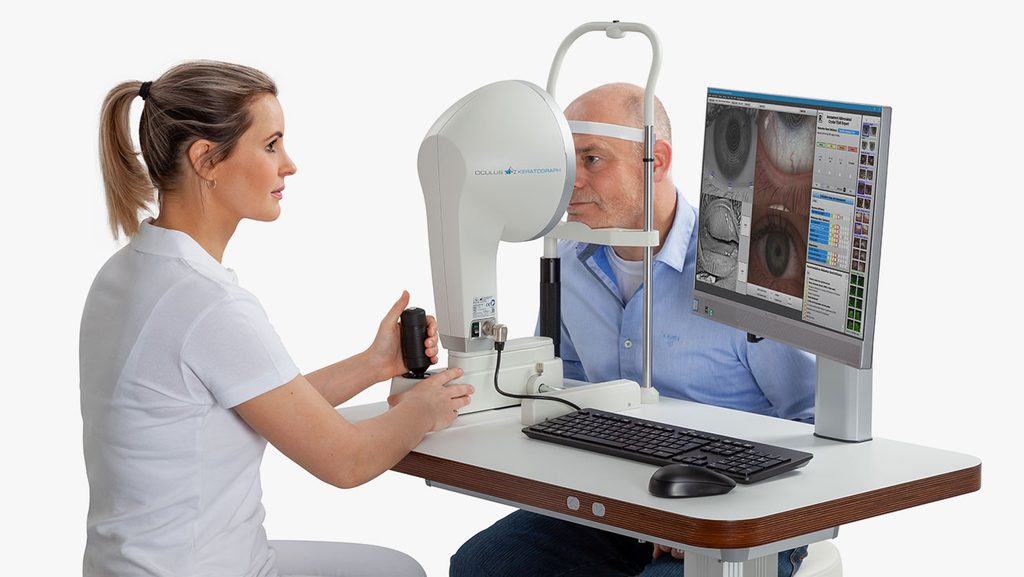
Northpoint Eye Studio uses the OCULUS Keratograph 5M, an advanced, noninvasive diagnostic instrument that helps Dr. Adeleke evaluate the tear film and meibomian glands. This technology can assess tear film stability, the tear meniscus, the oily lipid layer, and the structure of the meibomian glands.
While the Keratograph does not diagnose Demodex mites directly, it provides valuable information about associated dry eye disease and gland dysfunction. Combining eyelid examination findings with advanced dry eye testing helps Dr. Adeleke identify which problems may be contributing to your symptoms and recommend appropriate care.
Treatment depends on the severity of eyelid inflammation, the presence of Demodex-related findings, and whether other conditions such as MGD or dry eye disease are also present.
Treating Demodex blepharitis may require prescription medication that specifically targets the mites. Additional therapies can help manage associated eyelid inflammation, debris, and meibomian gland dysfunction, but they do not replace mite-targeted treatment when it is needed.
Northpoint Eye Studio offers several in-office treatments that can support eyelid health and address symptoms associated with blepharitis and dry eye disease.
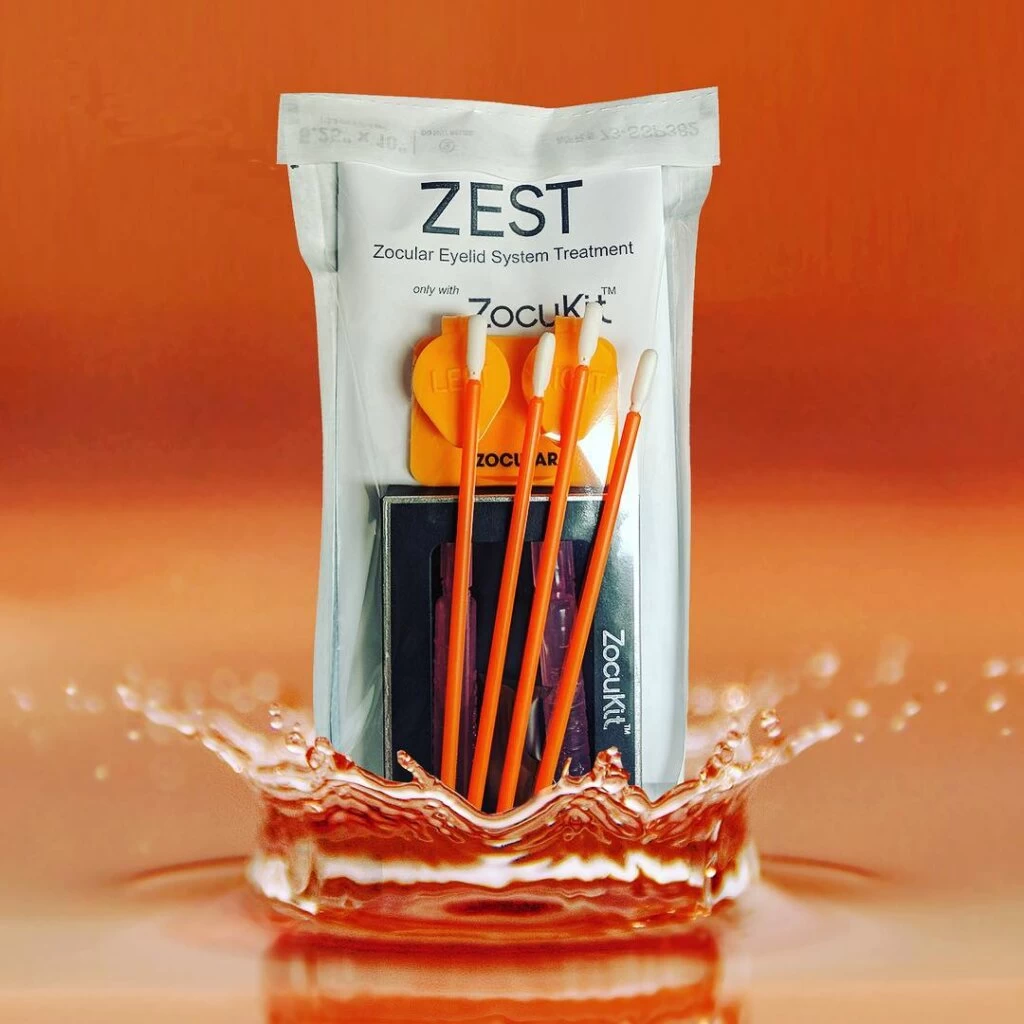
When debris, biofilm, and buildup accumulate along the eyelashes, ordinary at-home cleaning may not be enough. Northpoint Eye Studio offers ZEST (Zocular Eyelid System Technology), a professional eyelid cleansing treatment designed to gently exfoliate the eyelid margins and eyelashes. ZEST helps remove accumulated debris, biofilm, and excess bacteria that can contribute to eyelid irritation.
For patients experiencing blepharitis, professional eyelid cleansing can be an important part of managing the eyelid environment. However, cleaning alone does not necessarily eliminate Demodex mites, so additional treatment may be needed when Demodex blepharitis is diagnosed.
Demodex blepharitis can occur alongside other inflammatory eyelid conditions, including meibomian gland dysfunction and ocular rosacea.
For appropriate patients with MGD-related dry eye disease, Northpoint offers OptiLight by Lumenis, an intense pulsed light (IPL) treatment designed to improve signs of dry eye associated with meibomian gland dysfunction. OptiLight delivers controlled pulses of light to the skin below the eyes to help address inflammatory factors that contribute to gland dysfunction.
IPL has also been studied for its potential effects on Demodex populations. However, OptiLight’s primary role at Northpoint is the management of MGD-related dry eye, rather than serving as a replacement for mite-specific treatment.
Dr. Adeleke can determine whether IPL is appropriate based on your eye health, skin type, and examination findings.
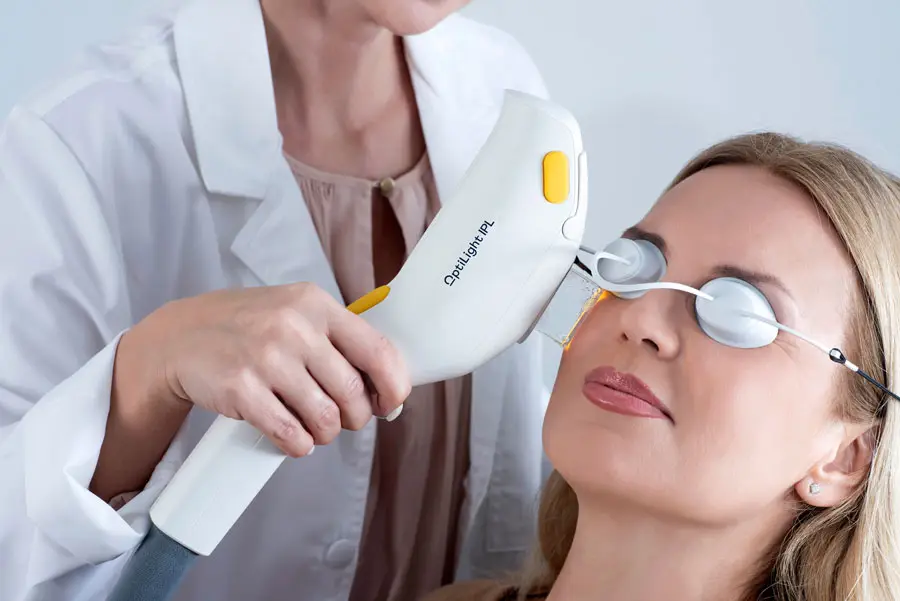
When blocked oil glands contribute to dry eye symptoms, addressing those blockages may help improve tear film quality.
Northpoint Eye Studio offers TearCare, an in-office treatment that applies controlled heat to the eyelids to soften thickened oils within the meibomian glands. Following the heating process, Dr. Adeleke performs gentle gland expression to help clear obstructions and improve oil flow.
TearCare does not specifically treat Demodex mites. Instead, it addresses meibomian gland dysfunction that may coexist with Demodex blepharitis. For patients experiencing both eyelid inflammation and evaporative dry eye, treating associated gland dysfunction may be an important part of improving overall eye comfort.
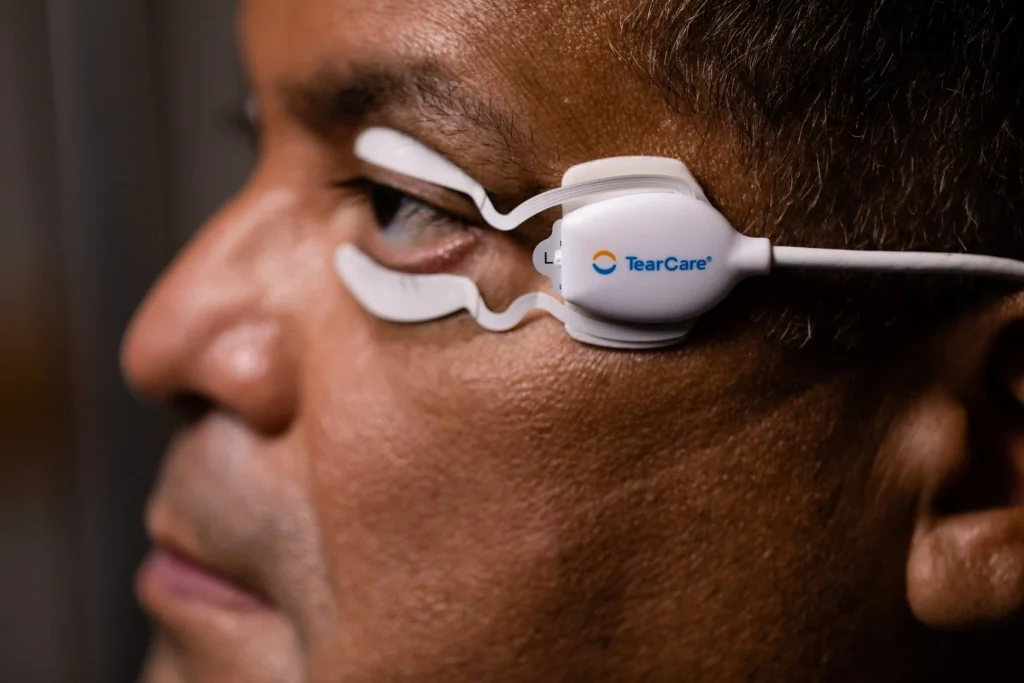
Daily eyelid hygiene can help reduce buildup and support healthier eyelids, particularly for individuals prone to blepharitis.
Some helpful habits include:
Avoid applying concentrated tea tree oil or other harsh products directly to the eyelids, as these can irritate the delicate skin and ocular surface.
Remember, although good hygiene can support eyelid health, it should not be considered a substitute for professional treatment when Demodex blepharitis is present. For additional guidance, read our article on Blepharitis Home Remedies and Treatments.

Living with itchy, crusty, or irritated eyelids can be frustrating, especially when eye drops and home remedies only provide temporary relief.
At Northpoint Eye Studio in Concord, NC, Dr. Joyce Adeleke takes a personalized approach to evaluating dry eye disease and eyelid inflammation. Through detailed examinations, advanced diagnostic technology, and treatment options such as ZEST eyelid cleansing, OptiLight IPL, and TearCare, the goal is to identify and address the factors contributing to ongoing discomfort.
Whether your symptoms are related to Demodex blepharitis, meibomian gland dysfunction, or another underlying condition, understanding the cause is the first step toward healthier, more comfortable eyes.
Call Northpoint Eye Studio at (704) 766-1130 to schedule an evaluation and learn which treatment options may be right for you!